TechNews: How Much R-Value Do You Need?
When it comes to commercial roofing, insulation isn’t just about comfort, it’s a key driver of energy performance, operating costs, and code compliance. One of the most common questions building owners and designers ask is: How much R-value do I really need? The short answer depends largely on climate zone, as defined by ASHRAE.
A Quick Refresher: What Is R-Value?
R-value measures thermal resistance, or how well a material resists heat flow. The higher the R-value, the better the building's thermal efficiency, helping to reduce heating or cooling costs. In roofing assemblies, total R-value is typically achieved by combining layers of insulation rather than relying on a single product. LTTR value represents the average thermal performance over time as the material ages, providing insight into the insulation's long-term performance.
Why ASHRAE Climate Zones Matter
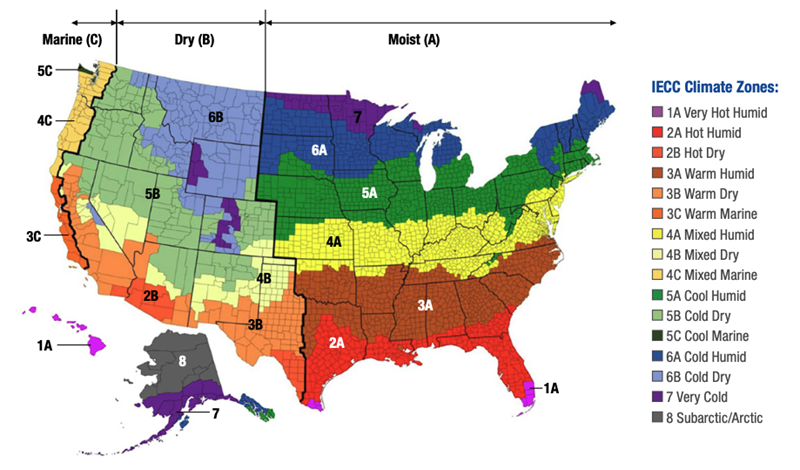
ASHRAE (the American Society of Heating, Refrigerating and Air-Conditioning Engineers) divides North America into eight climate zones, ranging from hot (Zone 1) to very cold (Zone 8). These zones form the basis of energy standards such as ASHRAE 90.1, which many state and local codes reference for minimum insulation requirements.
Because heating and cooling demands vary dramatically by location, the required roof insulation increases as climates get colder.
Minimum Roof R-Values by Climate Zone (At a Glance)
While exact requirements can vary by code edition and roof assembly type, minimum continuous insulation levels for commercial roofs generally fall into these ranges:
A Brief History of Rising R-Values
Minimum roof R-values haven’t always been this high. Over the past few decades, insulation requirements have steadily increased as energy costs rose and building science improved.
Beyond the Minimum
Meeting the minimum R-value is often just the starting point. Many owners choose to exceed code to reduce energy use, improve occupant comfort, and future-proof their buildings against rising energy costs and evolving regulations.
The right R-value isn’t just about compliance; it’s about designing a roof system that performs for decades.
For more information, check out the following resources:
R-value minimums by state
ASHRAE regions
A Quick Refresher: What Is R-Value?
R-value measures thermal resistance, or how well a material resists heat flow. The higher the R-value, the better the building's thermal efficiency, helping to reduce heating or cooling costs. In roofing assemblies, total R-value is typically achieved by combining layers of insulation rather than relying on a single product. LTTR value represents the average thermal performance over time as the material ages, providing insight into the insulation's long-term performance.
Why ASHRAE Climate Zones Matter
ASHRAE (the American Society of Heating, Refrigerating and Air-Conditioning Engineers) divides North America into eight climate zones, ranging from hot (Zone 1) to very cold (Zone 8). These zones form the basis of energy standards such as ASHRAE 90.1, which many state and local codes reference for minimum insulation requirements.
Because heating and cooling demands vary dramatically by location, the required roof insulation increases as climates get colder.
Minimum Roof R-Values by Climate Zone (At a Glance)
While exact requirements can vary by code edition and roof assembly type, minimum continuous insulation levels for commercial roofs generally fall into these ranges:
- Zones 1 to 3 (Warm climates): R-20 to R-25
- Zones 4 and 5 (Mixed climates): R-25 to R-30
- Zones 6 to 8 (Cold to very cold climates): R-30 to R-35+
A Brief History of Rising R-Values
Minimum roof R-values haven’t always been this high. Over the past few decades, insulation requirements have steadily increased as energy costs rose and building science improved.
- Early energy codes focused more on basic thermal control than efficiency.
- Major updates in the 2000s and 2010s significantly increased required R-values, especially in colder climates.
- Recent code cycles emphasize continuous insulation to reduce thermal bridging, which occurs when heat bypasses insulation through more conductive materials, reducing overall energy efficiency and potentially causing condensation issues.
Beyond the Minimum
Meeting the minimum R-value is often just the starting point. Many owners choose to exceed code to reduce energy use, improve occupant comfort, and future-proof their buildings against rising energy costs and evolving regulations.
The right R-value isn’t just about compliance; it’s about designing a roof system that performs for decades.
For more information, check out the following resources:
R-value minimums by state
ASHRAE regions
Up Next
September 18, 2025
TechNews: Improving Productivity with 16' TPO
Versico’s VersiWeld 16’ TPO can help you ensure projects are completed on time and within budget, while minimizing waste and delays. This post will discuss ways 16’ TPO can help you maximize productivity.
August 21, 2025
TechNews: Thermoplastic Welding Tips
Here are Versico's recommendations and best practices for reducing cold welds and helping ensure the watertight integrity of TPO, PVC, and KEE HP single-ply roof systems.
July 17, 2025
TechNews: Air and Vapor Barrier Installation Errors
Avoiding some of the most common errors will help ensure your air and vapor barrier installation is a success.